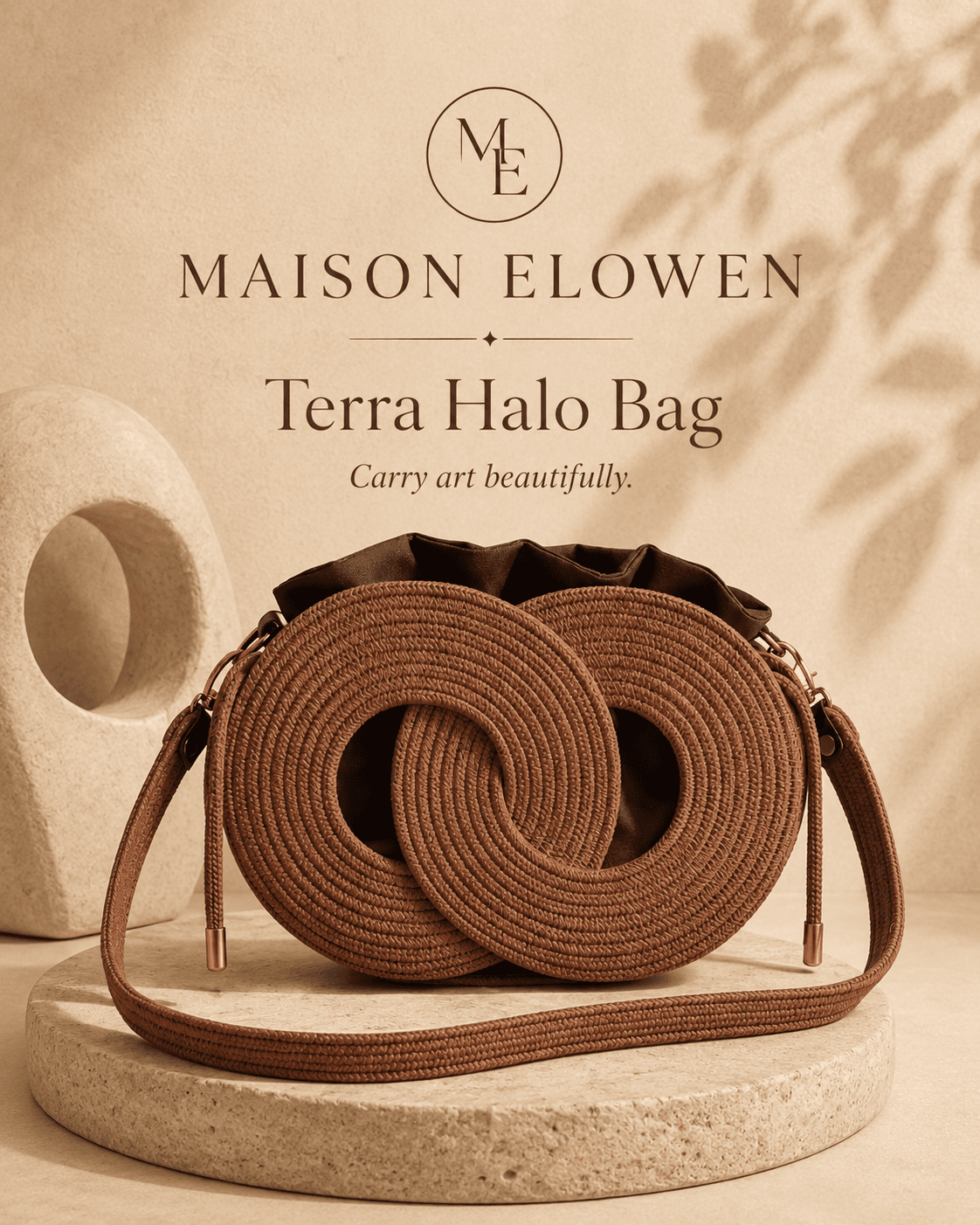
Tanning is the step that turns raw hide into leather: stable, supple, and able to survive rain, sun, and the oils from your skin without falling apart. Not all tanning is the same. At Maison Elowen, we favor vegetable-tanned leathers for the components where structure, hand-feel, and aging matter most — handles, bases, and trims that live against your palm every day.
What vegetable tanning does differently
Vegetable tanning uses plant-derived tannins — historically bark, leaves, and fruit — to bind to the collagen in the hide. The process is measured in weeks, not hours. The tannins penetrate gradually, which tends to yield a firmer temper early on and a more articulate response to conditioning and wear over time.
Chrome tanning, by contrast, uses mineral salts to achieve efficiency and uniformity at industrial scale. It has its place in modern supply chains. For our studio, the question is narrower: when a customer invests in a handwoven luxury tote, do we want leather that will tell their story through patina, or leather that will try to look unchanged until it suddenly doesn’t?
Patina is not a flaw
Patina is the soft shift in color where a handle brightens, where a corner eases, where sunlight and handling write a private ledger on the surface. Vegetable-tanned leather tends to record that ledger legibly — which is why collectors speak about “good” patina the way oenophiles speak about terroir.
We do not promise perfection on day one. We promise materials chosen to reward care: occasional conditioning, sensible storage in the dust bag provided, and avoiding prolonged saturation. Those habits extend the life of the fiber for years.
How to care for vegetable-tanned trims
Spot-clean with a soft, slightly damp cloth and allow the piece to air-dry away from direct heat. Use a quality leather conditioner sparingly — a little on a clean cloth, worked in gentle circles. If you are uncertain about a product, ask your cobbler or write to our care inbox; we would rather answer twice than see a solvent strip tannage you have lived with for a decade.
Material honesty is part of the contract we make when we sell a slow-made bag. If you are researching vegetable-tanned leather handbags, compare tannage, warranty posture, and how transparent a brand is about where fiber meets skin. When those details align with your values, the purchase stops feeling speculative and starts feeling considered.
Editorial · MAISON ELOWEN
← All journal entries